
History and Team
Governance
Recent Projects
Team
From the parish register to the database...
The Balsac Population Database was initially the brainchild of sociologist and historian Gérard Bouchard, who had just completed his doctorate in France, where he had employed a new methodology developed in social history: the reconstruction of families based on parish records. After becoming a professor at UQAC, he undertook the creation of a population database by digitizing records of births, marriages, and deaths in the Saguenay–Lac-Saint-Jean (SLSJ) region and applying the family reconstruction method to reconstruct the region’s population over a period of nearly 150 years, from the beginning of French-Canadian settlement in 1837 through 1971. This first phase, covering more than 660,000 records, was completed in 1986 and enabled numerous studies in social history and historical demography on the Saguenay–Lac-Saint-Jean region.
The immense potential of this data for future research motivated the expansion of the project beyond the region to cover the entire province of Quebec. The focus then shifted to marriage records, which were integrated through 2011, bringing the total to 2 million records. The pace of integration accelerated significantly thanks to the automatic recognition of handwritten documents and the addition of civil registry records through the i-Balsac project, led by Hélène Vézina. In 10 years, the number of records in the Balsac database grew to 5 million. Currently, the project continues to grow. To address its weakest demographic coverage, specifically the period from 1970 to the present, Balsac is currently focusing its efforts on obituaries.
Leading the Balsac Project
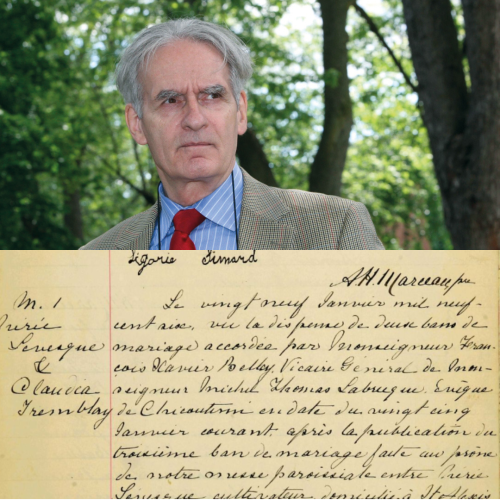
The Balsac research infrastructure celebrated its 50th anniversary in 2022. Since 1972, the project has had three directors:
- Gérard Bouchard is a professor in the human sciences department at the University of Quebec at Chicoutimi. He has a master’s degree in sociology from Laval University (1968) and a doctorate in history from the University of Paris (1971). He founded the BALSAC project and directed it from 1972 to 2010.
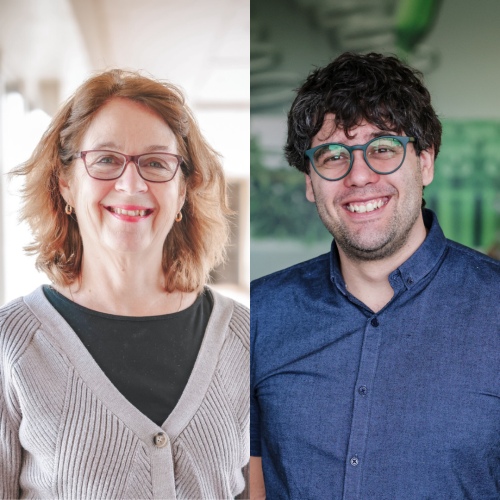
- Hélène Vézina holds a doctorate in demography from the University of Montreal and is a professor emerita at the University of Quebec at Chicoutimi. Her research focuses on issues in historical demography and population genetics within a multidisciplinary framework. From 2010 to 2023, she directed the Balsac Project, overseeing the development and use of the population database.
The Balsac Project is currently led by Simon Girard, a professor of genetics in the Department of Basic Sciences at UQAC. Simon Girard has a master’s degree in neurological sciences and a doctorate in molecular biology at the University of Montreal. His research juggles several areas of interest, including the study of genetic factors that can lead to epilepsy, schizophrenia or asthma; the genetics of Quebec populations; as well as genomics in general.
Responsible Management of Genealogical Data
Unlike other genealogical databases, the Balsac population register has not opted to privatise its data. As the register’s development is made possible primarily through public funding, the Balsac data is available to researchers on request. One of the main aims of the infrastructure is to help advance research.
Furthermore, since the launch of the CopaQ platform, data from the Balsac population register dating back 100 years or more has also been made available to the public – free of charge! All you need to do is create an account on the platform to access it.
To find out more about how data from the Balsac population register is managed, please visit our Cadre de gestion des données.
Recent Projects
Development of a Reference Genome Representative of the Population of Quebec (GenoRef-Q) [2019- ]
In our ageing population, the prevalence of many common diseases is increasing and their burden threatens our societies. For instance, cardiovascular diseases remain the leading cause of mortality worldwide. In Canada, more than 1.6 million individuals have heart diseases and direct costs for treating cardiovascular diseases are $7.4 billion per year, the highest for a disease. Hypertension is the most common cardiovascular disease in the world (1.13 billion people) and account for 13 per cent of annual deaths worldwide. Finally, dementia affects 50 million people worldwide and this number is expected to triple by 2050 at an estimated cost for the societies of $4 trillion. These three examples highlight the burden that such diseases represent in our societies, and the need to improve their prognostic, diagnostic and treatment. Precision medicine aims to identify the root causes of diseases in order to tailor prediction, prevention and treatment to each individual. One strategy to achieve this aim is to integrate into clinical care information hidden in the DNA of each person. Whole-genome DNA sequencing is now a robust technique that can reliably read a person’s genome, that is, the information contained in a person’s DNA. Several international efforts are currently ongoing in order to document genetic variation in different human populations.
Our project – the GenoRef-Q Initiative – will sequence the genome of 1900 participants recruited in CARTaGENE, the population-based cohort of the Province of Quebec. This resource will enable multiple precision medicine-related activities and set the stage for future projects led by the new generation of scientists. For example, the GenoRef-Q Initiative will create a comprehensive catalogue of genetic variants found in the population of Quebec, a formidable tool for clinical geneticists and other clinicians to interpret the results of genetic testing and to pinpoint the cause of various genetic diseases. The sequence information will also be useful to decipher existing genetic data and to prioritize further development of more specific drug targets. The GenoRef-Q Initiative will create opportunities for researchers in Quebec, in Canada, and internationally that will foster research in human genetics and precision medicine. This, in turn, will lead to a better understanding of genetic risk in Canadian populations. As such, it is perfectly aligned with the priorities of multiple universities and research centers, as well as the provincial and federal governments.
Another feature of this unique initiative will be carried out in collaboration with the BALSAC population file, a structured tool for tracking the genealogical paths of individuals. Access to such a file paves the way for research that highlights the characteristics of Quebec’s population in terms of founding effect, growth, diversity and regional structures. According to Hélène Vézina, director of the BALSAC project and professor at the Université du Québec à Chicoutimi, “the synergy between the GenoRef-Q initiative and BALSAC will not only enhance the project by adding a socio-historical dimension, but will also reaffirm the relevance of the BALSAC project at the dawn of its 50 years of existence”.
i-BALSAC: A multisectoral infrastructure for high-resolution mapping of the French-Canadian population [2019-2022]
Three types of requests have been expressed by the scientific community in recent years. First, genomics researchers working with genealogical information want the integration of genealogical and genetic data into a formal and sustainable structure. For the moment, these are only linked to specific projects for a fixed period. Secondly, the extension until the 20th century of the period for which we have a comprehensive reconstruction of the Quebec population established from all civil register certificates (births, marriages and deaths), arouses great interest among researchers on both the social and biological sciences (e.g. studies of evolutionary biology). Finally, in the wake of the spatial turn that has taken place in the social sciences, it seems essential to offer a framework for the analysis and interpretation of the spatial dimension of genealogical and genetic data.
In response to these needs, the BALSAC infrastructure project (i-BALSAC), a dynamic and versatile multi-sector platform for cutting-edge research in biological and social sciences, was developed. The BALSAC population file forms the basis of this infrastructure, which is based on the integration and linking of genealogical, genetic and geographical data. The project also includes the development of analytical and statistical tools (based on the joint exploitation of genealogical and genetic data) and mapping (construction of a historical geographic information system (GIS) that will optimize the use of these datasets. It builds on partnerships with CIEQ and PRDH as well as the research platform CARTaGENE and will pave the way for promising new collaborations, notably with the National Library and Archives of Quebec (BAnQ) for the demographic component and Genome Quebec for the genetics component.
The construction of i-BALSAC will enable high-resolution mapping of the French-Canadian population through a genomic, genealogical and geographical approach, and will provide a historical look at four centuries. It will provide access to a vast set of biographical information located in time and space, allowing the study of populations on the basis of individual trajectories within families and communities from a multigenerational perspective. To our knowledge, no global population has so far been characterized at such a level of accuracy, completeness and temporal depth. The idea of such an infrastructure is particularly appropriate for the French-Canadian population, in particular because of the modalities of its formation (initial founding effect, the presence of interbreeding, diversity of regional settlement histories), the resulting genetic structure and the exceptional quality of genealogical data that have no equivalent in North America. Ultimately, the infrastructure will form a population study laboratory and a place of exchange for researchers from a variety of disciplinary backgrounds. It will address complex research issues based on innovative multidisciplinary studies. Both social and biomedical researchers will benefit from this new research infrastructure. The following sections provide an overview of the research that can be done using i-BALSAC.
Three Centuries of Francophone Migration in North America [2019-2026]
The project aims to highlight the central place of Francophone migration in the genesis and evolution of North American populations over a period of three centuries. It will nourish reflections on contemporary issues of immigration, cultural diversity and living together. The project aims to examine the impact of migration on the collective and individual experience of Francophones in North America. To do this, the team, made up of partners and participants, is studying: 1) the migratory movements and processes of North American Francophones; 2) the cultural and linguistic circulations that accompanied them; 3) the stories to which they gave rise.
These three axes are analysed from: 1) from an interdisciplinary perspective combining heritage and academic knowledge; 2) a variety of spatial, social and temporal scales; 3) multiple perceptible interactions at both macro and micro levels.
Four groups are the subject of this extensive investigation: 1) the Acadians, whose origins date back to the early 17th century and whose deployment on the Atlantic coast was disrupted by the Great Disturbance (1750-1800); 2) French Canadians, who came from the St. Lawrence Valley from the 17th century onwards and gradually became present throughout North America; 3) the Métis, born of the encounter between Europeans and First Nations, who occupied large swathes of the central and western parts of the continent at the end of the 18th and 19th century; 4) migrants from France, Belgium, Switzerland and Syria (including the territory of present-day Lebanon) who stayed or settled permanently on the continent.
The problem, which is based on the combined analysis of migratory movements and processes, cultural and linguistic circulations, as well as narratives, is original. For the first time, an interdisciplinary team of historians, geographers, demographers, linguists, ethnologists, sociologists, economists and specialists in literary and cultural studies analyses these three components at various temporal, social and spatial scales, using numerous sources and databases.
This large-scale project brings together 41 participants and 27 heritage and academic partners from Canada, the United States and Europe. The 11 heritage partners, with their varied expertise in research and knowledge mobilization, provide intellectual leadership within the team.
The knowledge produced is disseminated with extensive use of recent developments in information and communications technologies, without however renouncing to traditional modes of dissemination. The project culminates with the creation of a bilingual virtual exhibition. In short, it reaches the scientific community, including students, as well as members and clientele of partner organizations, schoolchildren and any public interested in the Francophone presence in North America.
The Quebec Participatory Cohort (CopaQ)
The Quebec Participatory Cohort (CapaQ)project launched in January 2022, is a participatory science platform developed jointly with the expertise of BALSAC, which aims to collect data on the Quebec population for scientific research purposes.
COPAQ specifically targets the participation of people who have already completed a genetic test with a private company. These tests, which are usually performed using a saliva sample, gather valuable information about the population. However, this information remains essentially under the control of private companies.
This is why CopaQ offers participants the opportunity to give the scientific community access to the information obtained during these tests, in exchange for additional information on their genetic background and their genealogy. Participants could therefore learn more about the geographic origin of their ancestors, their genealogical links with other participants and, in certain cases, their genetic risk factors by having privileged access to scientific research concerning them.
CopaQ is always looking for participants! Interested in actively contributing to scientific research, find out how to participate: How to participate? | COPAQ
Our Team
Simon Girard
Simon Girard

Häxan Bondu
Häxan Bondu
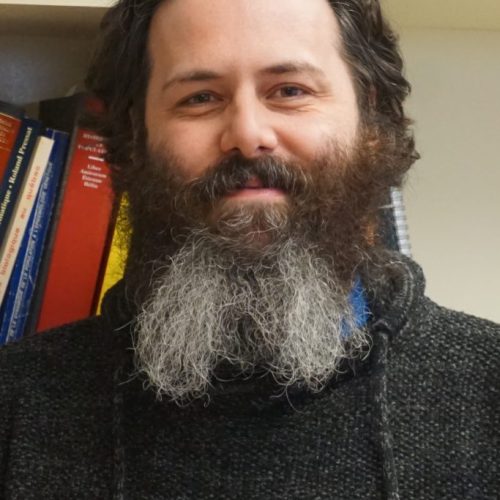
James McGrath
James McGrath

Pierre-Karl Gagnon

Pierre-Karl Gagnon

Thomas Quintal
Thomas Quintal
Steering committee
- Häxan Bondu – Research Professional, BALSAC
- Edith Breton – Professeure en génétique humaine au Département des sciences fondamentales, UQAC
- Alexandre Dubé – Professor in History, Department of Humanities and Social Sciences, UQAC
- Simon Girard – Professor of Human Genetics, Department of Basic Sciences, UQAC
- Arnaud Montreuil – Professor in History, Department of Humanities and Social Sciences, UQAC
Access Committee
- Alexandre Dubé – Professor in History, Department of Humanities and Social Sciences, UQAC
- Isabelle Gaudet – Professor of Psychology in the Department of Health Sciences, UQAC
- Arnaud Montreuil – Professor in History, Department of Humanities and Social Sciences, UQAC
- Claude Thibeault – Research and Development Officer at the décanat de la recherche, de la création et de l’innovation and Coordinator of the Research Ethics Committee involving Human Subjects
- Häxan Bondu – Research Professional, BALSAC
- Pascal Fortin , Department of Computer Science and Mathematics, UQAC