The essential resource
for demographic research
What is the Balsac database?
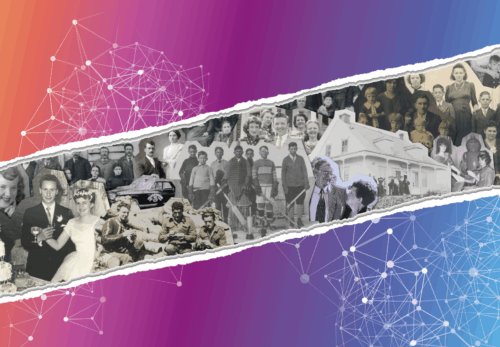
The Balsac population database, developed since 1971 at the Université du Québec à Chicoutimi, contains data on the population of Quebec from the early days of European settlement in the 17th century to the present day.
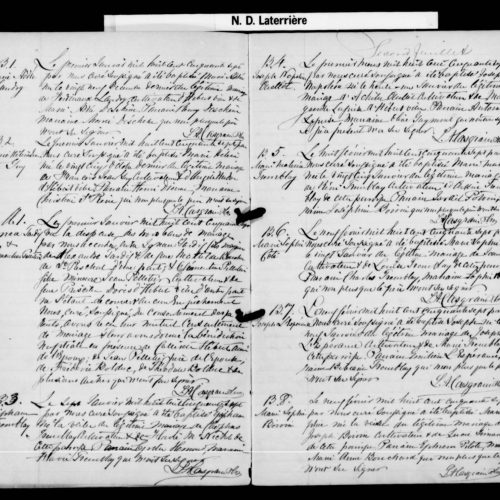
This data comes primarily from the digitization of civil registry records (baptisms, marriages, burials) and has been linked together to reconstruct families and genealogical lineages spanning nearly 400 years. Today, the Balsac population database is a major research infrastructure used by researchers in Quebec and elsewhere, in both the social sciences and the biomedical sciences.
The Balsac population database now contains data on more than 6 million known individuals spanning a period from 1621 to the present.
A closer look at the Balsac population database

Scientific research
Access to data for research purposes may be granted to researchers who request it, provided that their request is consistent with the purpose of the Balsac population database.

Public access
Since 2025, Balsac data spanning more than 100 years has been available to the public through the Quebec Participatory Cohort (CopaQ) citizen science platform.

Other resources
To view the Balsac data management framework and other project documentation, please visit the resources page.
News



Frequently Asked Questions
Can I enter my genealogical information into the Balsac population database and thereby contribute to the advancement of research?
Si vous souhaitez offrir vos informations généalogiques, vous pouvez le faire par le biais de la plateforme CopaQ!
Pour les personnes qui désirent plutôt offrir un ensemble de données généalogiques à Balsac, elles peuvent le processus de dons de données. Pour plus d’informations sur ce processus, vous pouvez lire le document ici.
Can I get information about my family history from the Balsac database?
Unfortunately, the Balsac Project’s mandate is to serve the needs of the scientific community, which means that access is granted only to researchers affiliated with recognized educational and research institutions. Furthermore, due to constraints related to the respect and protection of personal information, the dissemination of data is governed by strict policies.
As part of the CopaQ project, however, you can learn more about your genealogy by contributing your genealogical data to the project. The project team will analyze this data and provide participants with interesting genealogical insights through the CopaQ report. This report will include, among other things, information on the regions of Quebec represented in their genome, the origins of their ancestors as well as their movements and migrations, and the frequency of surnames in their family tree. To learn more about the CopaQ project, click here: https://www.copaq.ca/en/the-project/
Can I withdraw from a research project?
If you were recruited for a research project in which you were asked to provide personal genealogical data, you can always withdraw from the study. Please refer to the information and consent form you signed and submit a formal request to the researcher who contacted you. Note, however, that genealogical data is never destroyed; it is the link between your genealogy and the project that is severed, which automatically removes you from the study.
How can I access the data in the Balsac database?
Full access to Balsac, which is restricted to researchers only, requires the submission of an access request form. However, through the CopaQ platform, a large portion of the dataset is publicly available, with the exception of data less than 100 years old, for confidentiality reasons.